










(Posted on 11/10/21)
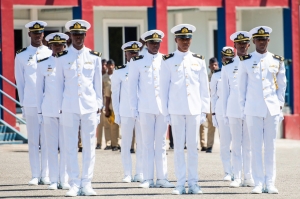
Restrictions on crew change and repatriations are impacting cadets at a time when the shipping industry desperately needs to recruit more young people.
Crew travel problems can have a knock-on effect on cadet training by preventing a cadet from reaching their ship placement to gain vital experience at sea or delaying them from returning to continue the next phase of their maritime studies.
During a webinar on Seafarers’ Welfare, hosted by the Maritime Authority of Jamaica (MAJ) on behalf of Jamaica’s Ministers of Transport & Mining and Foreign Affairs & Foreign Trade, panellists heard how the rotation of cadet berths has become a victim of the Covid-19 pandemic and global travel restrictions.
Captain Devron Newman, Dean of the Faculty of Nautical Studies and Marine engineering at the Caribbean Maritime University in Jamaica, told the discussion that delays in crew changes adversely impact some cadets because they do not have the necessary documentation, such as Certificates of Competency or Proficiency, that a fully-fledged seafarer has to prove their role as a seafarer. The panel agreed that cadets need to be afforded the same designation as qualified seafarers and be given appropriate passage to and from their ship placements.
Urging more nations to recognise seafarers as “essential workers” and allow them to travel to and from their vessels, Rear Admiral (ret’d) Peter Brady, MAJ Director General, said: “There’s an absolute need for crew changes and repatriation. It is critical for them to visit their families to help their mental health, to rest, and to prepare them for their next posting.”
Advising that, at present only about 60 countries have designated seafarers as essential or key workers, Admiral Brady highlighted the need to encourage and influence other member states to recognise the important role seafarers play in the global supply chain and to put in place measures to enable crew changes and repatriations.
The current problems represent “a human crisis that also impacts families at home and should be condemned,” he commented. “This is just not good enough for these people who have done so much for us.”
The panel discussion, which took place on World Maritime Day, also featured a seafarer’s point of view. Third Officer Javed Loza stressed that the mental health of seafarers was a crucial factor that should be prioritised by the shipping industry. “Good mental health makes all aspects of life onboard positive,” he said, pointing out that a good positive attitude to work and life at sea can also have a beneficial impact on commercial shipping operations.
His comments were echoed by Dr Hortense Ross Innerarity, Superintendent of Pilotage with the Port Authority of Jamaica, who has spent more than 30 years in the shipping industry. Agreeing that seafarer mental health and crew changes should be priorities across the world, she told the debate: “We are very fortunate we don’t have more accidents at sea.”
Efforts to encourage more young people into the maritime industry are of prime importance, the panellists all concurred. Captain Steven Spence MAJ Director of Safety, Environment and Certification, spoke of the need to improve the visibility of shipping. He urged all seafarers to help raise awareness of their profession and called for shipping companies to invest in cadet training to sustain the industry, while advising that cadets need to show loyalty to companies willing to train them.
The Maritime Association for Clean Seas (MACS) has published a series of practical guides to enable... Read more
Shanghai has officially become the world’s second-most prominent shipping hub, according to the... Read more
OceanScore, the maritime data and sustainability company helping shipping and ports turn regulatory... Read more
Bulk carrier safety continues to show steady long-term improvement, but the nature of risk facing seafarers... Read more
Following stronger than expected operational performance in dry cargo, reduced costs associated with... Read more
Algoma Central Corporation, a leading provider of marine transportation services, has announced that... Read more
Major maritime, ports and energy companies have been identified by Cydome’s threat-intelligence... Read more
As the global shipping industry faces mounting concerns over future crew availability, Danica Crewing... Read more
Following an attack on a vessel in the Gulf of Oman, IMO has decided to temporarily pause its evacuation... Read more
Leading health and wellness platform OneCare Group is calling on shipping leaders to recognise the immense... Read more