




(Posted on 04/07/25)
Turkish shipowner, Susesea, has successfully upgraded the cylinder lubrication strategy across its fleet of six bulk carriers by adopting Chevron’s Taro® Ultra Advanced 40 (TUA 40). Working closely with Chevron Marine Lubricants and its regional distributor, Petrol Ofisi, Susesea has streamlined vessel operations and reduced cylinder oil feed rates by approximately 33 percent, delivering both technical and commercial benefits.
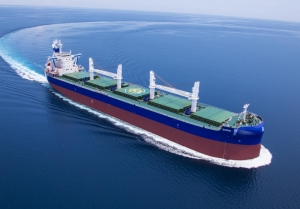
The six Japanese- and Chinese-built vessels, each with an average deadweight of 64,000 tons, are all equipped with MAN Mark 9 engines. These two-stroke engines demand high detergency lubrication to help maintain piston and ring land cleanliness, particularly when operating on very low sulfur fuels. Previously, Susesea’s engineers alternated between MAN Category I and Category II lubricants to manage this requirement, following a set schedule of three days on Taro Ultra 40 (Cat I) and one day on Taro Ultra 100 (Cat II). The system was effective, but complex.
By transitioning to a single Category II 40BN product, Susesea not only simplified onboard practices but also opened up new opportunities for procurement efficiency and long-term maintenance planning. Chevron’s TUA 40 has since become the preferred choice for all six vessels.
“Upgrading to a single Taro 40 solution means that we can now complete large-scale purchases in strategic ports like Singapore and carry a full year’s supply. That has proven to be extremely efficient for our operations,” said Mr. Bilge Kagan Dogan, Technical Manager at Susesea.
He continued, “We initially decided to switch to Chevron Cat II 40BN cylinder oil based on two main advantages: improved cleaning performance compared to 100BN oils, and cost reduction. Altogether, Cat II 40BN oil has delivered great value for performance.”
Chevron’s Taro Ultra Advanced 40 is a high-performance 40 Base Number (BN) Category II cylinder lubricant approved by MAN Energy Solutions for use in modern two-stroke engines. As part of the implementation, Susesea worked with Chevron and Petrol Ofisi to conduct scavenge port inspections at each port of call and track iron content and base number retention onboard.
Feed rates were reduced in controlled increments of 0.1 g/kWh, with all six vessels ultimately achieving consistent operation at 0.8 g/kWh. The results confirmed not only compliance with Original Equipment Manufacturer (OEM) cleanliness targets but also improved piston ring and ring land condition across the fleet.
With visual inspections reporting improved scavenge cleanliness and liner condition, the shift to TUA 40 also helped reduce task complexity for onboard crews. Inventory management and maintenance planning have since become more straightforward and less prone to error, supporting higher levels of operational uptime.
The success of the Susesea transition demonstrates how Chevron’s TUA 40 can help technically focused operators reduce feed rates while meeting the demands of modern engine architecture and very low sulfur fuel oil (VLSFO) operation. By simplifying from a two-oil to a one-oil strategy, operators can achieve greater control over procurement and logistics while reducing cylinder oil consumption and maintenance burden.
Chevron’s support throughout the process included performance monitoring, crew guidance, and lubrication strategy alignment with MAN ES specifications. The partnership model used with Susesea is part of Chevron’s broader commitment to supporting shipowners with compliant, field-proven solutions for the evolving fuel and regulatory landscape.
“It was a pleasure working with Susesea to support their adoption of Taro Ultra Advanced 40,” said Georgia Chaloulou, Technical Field Specialist at Chevron Marine Lubricants. “By closely monitoring the results and managing each step together, we helped ensure a successful outcome. Chevron is committed to providing practical, data-driven lubrication solutions tailored to each customer’s operational needs.”
“We are grateful for the guidance from Georgia Chaloulou, who supported us throughout the process,” added Mr. Dogan from Susesea. “Her expertise was instrumental in giving us confidence in the product.”
CM Technologies (CMT) has supplied its integrated onboard fuel/oil testing and analysis kits to a fleet... Read more
Superior Industries, Inc., a U.S.-based manufacturer and global supplier of bulk material processing... Read more
NDE Readymix Concrete Ltd., established in 2009, is the largest non-cement ready-mix concrete producer... Read more
German corrosion protection specialist Steelpaint has successfully completed a technical field trial... Read more
Veson Nautical has announced the Veson Platform, a unified, AI-powered experience that brings together... Read more
ABB has announced that it has entered into an agreement to acquire marine automation specialist Hø... Read more
NAVTOR has unveiled the latest iteration of its Digital Logbooks offering, featuring the industry&rsquo... Read more
The maritime industry is facing a rapidly changing fire risk on board vessels as electric vehicles and... Read more
Smart Ship Hub (SSH), the maritime intelligence and data collection platform, has launched one of the... Read more
World leading manufacturer of rope operated mechanical grabs for the dry bulk industry, Verstegen Grijpers... Read more