






(Posted on 29/04/26)
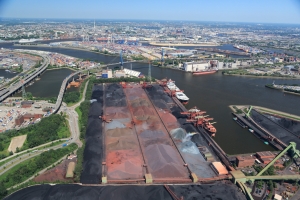
Senior representatives from ports, industry, and policy institutions across the Baltic Sea Region have convened in Hamburg for the workshop “From Ports to Green Corridors: Energy Transition and Decarbonisation in Transport.” The event highlighted Hamburg’s role as a central hub for sustainable maritime innovation.
Participants highlighted the need for long-term regulatory stability as a central driver of decarbonisation and the energy transition, alongside stronger regional collaboration to share best practices, coordinate investments, and develop scalable solutions. Discussions also emphasised the importance of further promoting efficiency gains and ensuring continued funding for pilot projects. A key takeaway was that sustainable port and logistics infrastructure are essential contributors to a resilient Baltic Sea Region.
The workshop was organised by the Free and Hanseatic City of Hamburg - Senate Chancellery - Baltic Sea Strategy Point in cooperation with Port of Hamburg Marketing, with kind support from Hamburg Port and Logistics AG (HHLA).
Ports are critical geopolitical assets and key enablers of Europe’s energy transition. Against this backdrop, the workshop aimed to strengthen the visibility of port-related challenges within the EU Strategy for the Baltic Sea Region and to foster enhanced cross-sectoral collaboration among policy areas such as energy, transport, safety, and shipping.
The programme featured a series of expert-led sessions addressing both operational realities and long-term transformation pathways. Discussions focused on:
The current status of decarbonisation efforts at the Port of Hamburg, including investments in onshore power supply, alternative fuel infrastructure, and green shipping corridors
A central component of the workshop was a structured dialogue with Policy Area Coordinators of the EU Strategy for the Baltic Sea Region. Participants jointly identified key challenges facing ports in the Baltic Sea Region and explored actionable solutions, including improved governance mechanisms, project development frameworks, and pathways to better integrate regional insights into EU-level policymaking.
The event also examined how the Strategy could further evolve to support more effective and sustained cooperation across sectors and national boundaries. Particular emphasis was placed on developing scalable project ideas and strengthening institutional linkages between stakeholders.
By bringing together port authorities, logistics operators, energy providers, and policymakers, the workshop served as a targeted platform for knowledge exchange and strategic alignment. The format combined expert presentations, moderated discussions, and interactive sessions designed to generate concrete outcomes and cooperation opportunities.
The Port of San Diego Board of Port Commissioners has approved an Option to Lease Agreement and authorised... Read more
AD Ports Group, an Abu Dhabi based, leading global enabler of integrated trade, industry and logistics... Read more
The Hamburg Port Authority (HPA) and SPG Qingdao Port Group have signed a Port Partnership Agreement... Read more
The Cook Labor Government in Australia has welcomed the award of a dredging contract to Jan De Nul ... Read more
A parliamentary letter in the Netherlands on the selection of a site for the construction of two new... Read more
The long-term safety cooperation between ESL Shipping and the port of SSAB’s Raahe site is visible... Read more
The Port of Liverpool is experiencing a surge in demand from fertiliser importers as continued uncertainty... Read more
PD Ports has further strengthened its bulk handling capability at Teesport with the arrival of... Read more
Enstructure, one of North America’s leading terminal and logistics companies, has announced that... Read more
The Duluth Seaway Port Authority and its terminal operations on Rice’s Point once again ranked... Read more