






(Posted on 20/04/26)
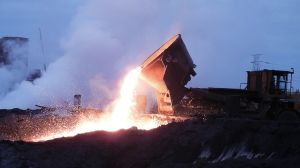
SSAB and Heidelberg Materials are entering a collaboration to develop electric arc furnace slag (EAF slag) into an alternative binder in cement. Research project brings together also leading expertise from universities and Swerim.
The project aims to develop EAF slag into an efficient and more sustainable alternative binder in cement, known as a Supplementary Cementitious Material (SCM), to reduce the climate footprint of the construction sector. The project has been granted funding of over SEK 20 million through The Swedish Agency for Economic and Regional Growth from the Just Transition Fund with national co financing.
“This is a natural next step in our shared journey toward creating valuable solutions for our by-products. We are transitioning to electric arc furnaces in Oxelösund with start of production planned for early 2027, in Luleå in 2029, and thereafter in Raahe, Finland. SSAB’s goal is production in line with sustainable development and circular economy. This also includes our side streams. Our ambition is to develop applications for the slag that will be generated in electric arc furnaces in the near future. Through this project, we are seizing these opportunities by combining strong expertise and long experience with a shared determination to drive change,” says Marko Mäkikyrö, Director, By-product Sales & Development at SSAB.
The new four-year research project builds on knowledge from previous successful research and collaboration initiatives. By bringing together leading expertise from Luleå University of Technology, the University of Oulu, and Swerim, along with industry partners SSAB and Heidelberg Materials, the project forms a strong consortium with unique competence and capacity. This provides the best possible conditions to take the next step in development and meet future challenges.
Goal: An industrially scalable solution
The focus is on developing methods to optimize the slag, from lab to pilot scale, and on evaluating performance in cement and concrete applications. The goal is to create an industrially scalable solution that can be applied to future products.
Heidelberg Materials and SSAB have a long-standing collaboration on raw materials by using parts of SSAB’s slag as input in cement production at the Slite cement plant in Sweden. This new project is an important part of a partnership as SSAB transitions its production to electric arc furnaces.
“We see a good opportunity in including EAF slag from SSAB as part of our strategy to reduce the carbon footprint of our products. Through this collaboration, we unite leading expertise from industry and research with a common ambition to deliver the building materials of the future” says Magnus Ohlsson, CEO at Heidelberg Materials Cement Sverige AB.
Rio Tinto has driven performance to achieve 3% YoY CuEq1 growth in the first half of 2026.Chief Executive... Read more
BHP have released its Operational Review for the year ended 30 June 2026.Chief Executive Officer, Brandon... Read more
Bulk carriers carrying elemental sulphur cargoes in the Strait of Hormuz are at significant risk of... Read more
Further to BHP’s announcement in February, BHP, through a wholly owned subsidiary, has executed... Read more
Australia’s Federal Government's fertiliser support package has come under scrutiny as global... Read more
SSAB has once again paused work at the construction site for its new steel mill in Luleå, Sweden... Read more
Trafigura Group Pte Ltd. has announced the issuance of a USD500 million senior Reg S bond with a five... Read more
The National Grain and Feed Association (NGFA) in the USA has welcomed the release of Senate Agriculture... Read more
Anglo American plc, through its 50.1%-owned subsidiary, Anglo American Sur S.A., and Codelco, have announced... Read more
SSAB Americas, The Greenbrier Companies and Alter Trading are partnering on a circular economy project... Read more