










(Posted on 31/01/25)
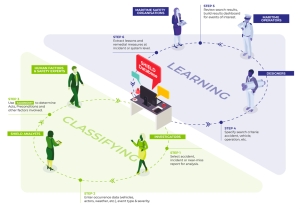
The University of Strathclyde in Scotland, UK is encouraging ship operators, safety professionals and accident investigators to use the Safety Human Incident & Error Learning Database (SHIELD) to better understand the underlying root cause of human-factor related issues in maritime incidents.
SHIELD, developed by a consortium of partners across the aviation and maritime spheres as part of the European Union’s SAFEMODE project, was launched in 2022 and is now being used by major cruise lines, a UK-based ferry operator, safety agencies in Europe and Asia, and a number of accident investigation boards.
But more data is required if SHIELD is to have a material benefit on future maritime safety and policy, says Dr Rafet Emek Kurt, the head of the University’s Maritime Human Factors Centre, who led the SHIELD development for maritime.
"Human factors have long been recognized as a critical element in shipping safety, yet whenever there is an accident, in reaction to the lessons learnt we continue to overload the seafarer with more safety procedures, more checklists, more training. This is largely ineffective in reducing human factor incidents and increases the cognitive load on the seafarer. We need to address the root cause of an accident to have any meaningful impact.”
Kurt said that the SHIELD platform provides invaluable feedback to shipmanagers, policymakers, accident investigators, and ship and system builders to better quantify the human components in safety risk models, resulting in positive changes in ship design, operations and rules.
“So far, in the absence of high-quality data, the maritime sector has failed to include human factor considerations in critical decision making. As a result, envisaged safety improvements from the sector have been ineffective, with accidents continuing to occur at a steady rate after.”
Dr Kurt emphasised that through industry-wide collaboration and use of SHIELD, stakeholders can better understand underlying human factor contributors. The data can also serve to develop new accident and risk models as well as tailor research to address any shortcomings.
Using an iceberg analogy, where the visible part represents human factors, and the submerged part represents underlying conditions, Kurt said it is what’s beneath the waterline that is important.
“At the tip of the iceberg, it may be relatively easy to see what happened, when it happened and who did what. But the reasons why it happened are not uncovered. SHIELD allows us to take a deeper dive,” he said.
The SHIELD taxonomy assesses input data against a range of extenuating factors affecting human performance, such as workload, situation awareness, stress and fatigue, human system interfaces, and teamwork. But it goes further by providing insight into how organisational and leadership structures, strategies, cultures and socioeconomics play a part.
“It’s an effective safety learning platform but we need more companies to upload their data to allow the maritime industry to better capture and learn from the underlying human factor-issues in incidents. By aggregating anonymized data from participants, SHIELD researchers can identify emerging trends and patterns across the industry. It also helps ship operators by helping them address and identify the major accident contributors not typically picked up in an accident investigation report.”
Insights gleaned can also directly inform the work of naval architects, equipment manufacturers, and regulators. By understanding the human factors challenges faced by operators, these stakeholders can design safer, more user-friendly systems and implement targeted policies to address systemic problems.
"SHIELD represents a paradigm shift in how the shipping industry approaches safety," said Kurt. "By empowering shipowners to deeply analyse their accident data, we can move beyond the traditional 'human error' narrative and uncover the true drivers of incidents. This knowledge is invaluable in creating a safer, more efficient, and more sustainable maritime sector."
Shipowners interested in leveraging the power of SHIELD are encouraged to contact the University of Strathclyde’s Maritime Human Factors Centre.
The Maritime Association for Clean Seas (MACS) has published a series of practical guides to enable... Read more
Shanghai has officially become the world’s second-most prominent shipping hub, according to the... Read more
OceanScore, the maritime data and sustainability company helping shipping and ports turn regulatory... Read more
Bulk carrier safety continues to show steady long-term improvement, but the nature of risk facing seafarers... Read more
Following stronger than expected operational performance in dry cargo, reduced costs associated with... Read more
Algoma Central Corporation, a leading provider of marine transportation services, has announced that... Read more
Major maritime, ports and energy companies have been identified by Cydome’s threat-intelligence... Read more
As the global shipping industry faces mounting concerns over future crew availability, Danica Crewing... Read more
Following an attack on a vessel in the Gulf of Oman, IMO has decided to temporarily pause its evacuation... Read more
Leading health and wellness platform OneCare Group is calling on shipping leaders to recognise the immense... Read more