








(Posted on 26/04/18)
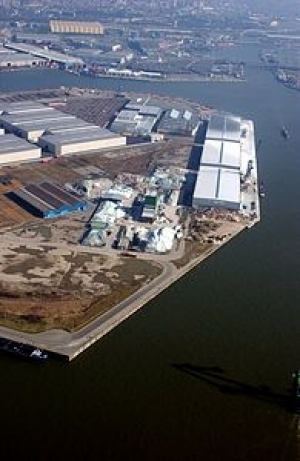
The port of Antwerp experienced an excellent first quarter with a freight volume of 58,328,678 tonnes, an increase of 7.1% on the same period last year. The total volume is a result of all freight categories with the exception of conventional breakbulk. The main driver is once again container freight which enjoyed very strong growth of 9.5% compared with the first three months of 2017.
Dry bulk finished the quarter at 3,383,384 tonnes, representing growth of 7.4%. This was mainly thanks to the larger imports of coal, fertilisers and sand & gravel, along with the higher volume of scrap metal exports.
Conventional breakbulk performed less well compared with the same period last year, falling by 3.1% to 2,512,276 tonnes. Non-ferrous metals, wood, paper & cellulose and fruit were the categories that suffered the largest drop. The volatility of the respective trades and further containerisation both played a role here.
While steel performed very well in the same period last year, it has now expanded slightly overall by 1.5%, despite imports suffering a large drop of 9.9%. Imports from China were down sharply in comparison with Q1 17, although this decline which first became apparent in the second quarter of last year has now stabilised. Imports of Indian steel too have gradually declined after the big peak in the first half of 2017. On the other hand there has been a sharp rise in imports from Turkey and Russia.
Exports of steel products, by contrast, give an opposite picture with growth of 19.7%. In comparison with the fairly weak first quarter of 2017 there has now been a strong revival in steel exports to the US, with the month of March doing particularly well. Clearly there has been an anticipatory effect in response to the American threat of import tariffs on various products including steel.
Liquid bulk experienced an increase of 4.6%, to 18,552,332 tonnes.
A total of 3,531 seagoing ships called at Antwerp during the first quarter, an increase of 0.7%. The gross tonnage for its part rose by 2.0% to 101,728,371 GT.
Exports to the US experienced strong growth in all sectors during the first quarter of this year. Developments in the steel trade were partly due to the threat of import tariffs being imposed on European products. But apart from steel this growth was driven above all by a sharp rise in chemical exports.
The impact of Brexit on UK volumes so far remains limited, as the first quarter closed with growth of 4%, probably due to the weaker pound. The UK remains the third-largest trading partner for the port of Antwerp. The Port Authority is therefore watching the situation very closely, and during the recent visit by the British Secretary of State Robin Walker it announced that it seeks to appoint a full-time representative in the UK.
In the first half of 2026, Port of Antwerp-Bruges handled 133.9 million tonnes of maritime cargo, a... Read more
PD Ports, one of the UK’s major port and logistics businesses, announced today that Paul Foreman... Read more
The Port of San Diego Board of Port Commissioners has approved an Option to Lease Agreement and authorised... Read more
AD Ports Group, an Abu Dhabi based, leading global enabler of integrated trade, industry and logistics... Read more
The Hamburg Port Authority (HPA) and SPG Qingdao Port Group have signed a Port Partnership Agreement... Read more
The Cook Labor Government in Australia has welcomed the award of a dredging contract to Jan De Nul ... Read more
A parliamentary letter in the Netherlands on the selection of a site for the construction of two new... Read more
The long-term safety cooperation between ESL Shipping and the port of SSAB’s Raahe site is visible... Read more
The Port of Liverpool is experiencing a surge in demand from fertiliser importers as continued uncertainty... Read more
PD Ports has further strengthened its bulk handling capability at Teesport with the arrival of... Read more